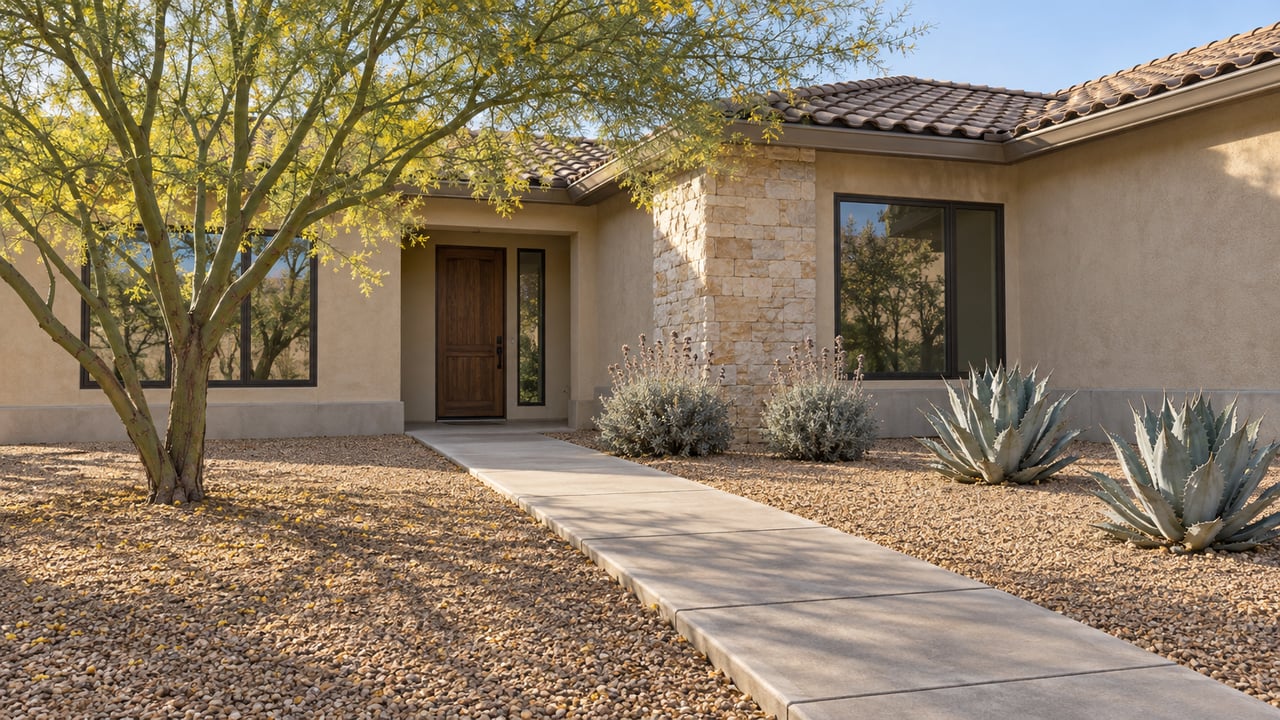
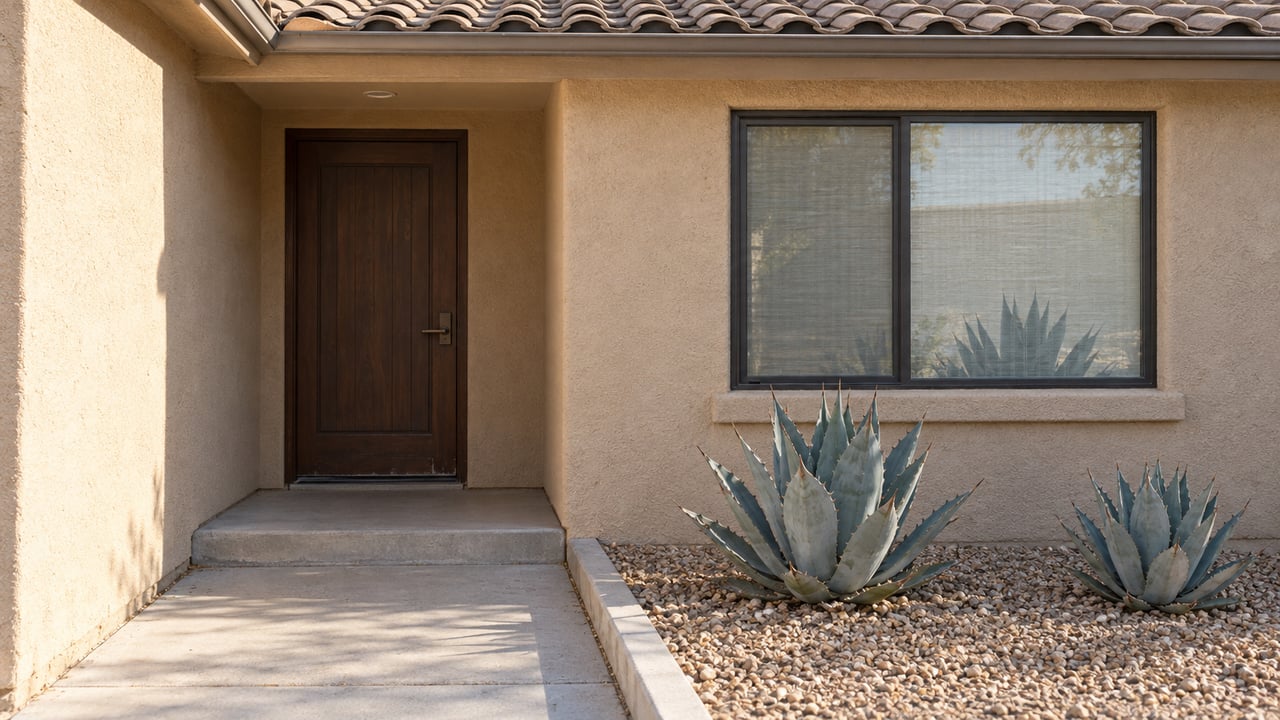
Walk a fairway-adjacent street in Green Valley North on a Saturday morning and the appeal is obvious. Established shade trees lean over the sidewalk, common areas along the entryways carry decades of mature turf, and the whole plan still reads the way its 1980s developers intended: green, in a place where green is not the default. That impression sells houses. It is also, right now, the subject of an unresolved lawsuit that could change what those common areas look like, and what they cost to maintain, before most buyers touring this fall have finished their first year of ownership.
This is not a story about whether Henderson is a good place to buy. It is a story about a specific piece of due diligence that median-price comparisons will never surface: the grass a buyer sees on a tour of an older master plan like Green Valley North is legally required to change, the rules for how much has to change are still being litigated, and the deadline for figuring it out is four months away.
The Law Behind the Lawn
Nevada passed Assembly Bill 356 in 2021, and it does one specific thing. It requires the removal of what regulators call nonfunctional turf, meaning irrigated grass that nobody actually uses, mostly found in street medians, HOA entryways, office parks, and the decorative strips that line so many Henderson common areas. Private backyards and functional turf, like the grass around a playground, are not the target. The compliance deadline is December 31, 2026. According to the Las Vegas Valley Water District, starting January 1, 2027, Colorado River water delivered through the Southern Nevada Water Authority can no longer be used to irrigate any turf that carries the nonfunctional designation.
The reason this lands harder in a community like Green Valley North than in a newer Henderson development is timing. Homes built between 2003 and April 2022 already faced front-yard grass limits, and anything built since April 2022 cannot have grass installed at all. Green Valley North traces back to Green Valley, the region's first master-planned community, which began development in the 1980s, long before any of those restrictions existed. Most of its single-family housing stock was built in the early 1990s. That means Green Valley North and communities like it carry the largest grandfathered footprint of common-area turf now caught in the conversion mandate, simply because they were allowed to plant it in the first place.
Four Months Left, Still No Final Rules
Here is the part a listing photo will never tell a buyer. Enforcement of AB 356 has been in and out of court all year, and as of this week the fight is still active.
| Date | What happened |
|---|---|
| 2021 | Nevada passes AB 356, banning irrigation of nonfunctional turf |
| January 2026 | A Clark County district judge grants a restraining order pausing SNWA's turf designations |
| April 2026 | The Nevada Supreme Court twice declines to shut down the case, letting it proceed |
| August 2026 | Plaintiffs file a motion asking the court to certify a valley-wide class and issue a single injunction before the deadline |
| December 31, 2026 | AB 356 compliance deadline |
| January 1, 2027 | Colorado River water can no longer irrigate nonfunctional turf |
A group of homeowners filed suit against SNWA arguing the agency's process for labeling grass nonfunctional exceeds what the legislature actually authorized, that owners get no real notice or appeal, and that removal has already killed mature trees that depended on that irrigation. The case has grown well past its original plaintiffs. As of an amended complaint filed in April 2026, homeowners associations representing more than 10,000 homes and more than 25 million square feet of grass had joined, and by May 2026 the case included the Nevada Silver State Alliance, a group representing 81 golf courses, along with Our Lady of Victory Catholic Church, which received a letter ordering it to remove grass used for outdoor prayer. The motion filed this week is asking a judge to settle enforcement standards valley-wide before the deadline arrives, rather than community by community.
None of that means the deadline moves. It means the rules for how aggressively a given HOA has to interpret "nonfunctional" are not fully settled, four months out.
What This Looks Like a Few Miles From Green Valley North
The clearest preview of what a legacy Henderson master plan goes through sits just down the road in Green Valley Ranch, a separate master plan built starting in 1994 by the same developer behind the original Green Valley. According to News 3 Las Vegas, residents near Wingbrook Park pushed back in early 2026 when the HOA moved to convert turf around the park to comply with AB 356. The HOA's own response to residents specified that more than 31,000 square feet of turf would stay in place, including everything surrounding the playground and shaded areas, and that removal elsewhere would be done by hand with a sod cutter under supervision from a certified arborist, specifically to protect tree roots.
That level of specificity exists because the stakes are real on both sides. One longtime resident told News 3 Las Vegas: "They're taking Green Valley and making it a brown valley." According to the Las Vegas Review-Journal, an arborist involved in the broader lawsuit has argued that turf removal across the valley has already killed roughly 100,000 trees. A Henderson-based landscape architecture firm has pushed back on that figure, arguing that keeping trees alive after a conversion is more a matter of irrigation design than a foregone conclusion either way. Buyers do not need to resolve that argument. They need to know it is happening in a community built on the same lineage as Green Valley North, with the same grandfathered turf now going through the same mandate.
The Dollar Mechanism Buyers Should Underwrite
SNWA offsets some of this cost through its Water Smart Landscapes rebate, which pays $5 per square foot for the first 10,000 square feet of turf converted, then a lower per-square-foot rate after that for HOAs and multifamily properties. That subsidy exists because the underlying expense is significant when you are talking about a common-area footprint measured in acres, not a single front yard.
What the rebate does not cover is everything downstream: irrigation redesign, tree protection during removal, and replacing trees that do not survive the transition. A December 2025 community newsletter cited in the same SNWA lawsuit shows Green Valley Ranch homeowners were told to expect a $10 monthly assessment specifically to replace dead, dying, and diseased trees tied to the conversion. Ten dollars a month sounds small. It is also a real line item that did not exist in that community's budget the year before, attached to a mandate that Green Valley North's HOA is working through on the same timeline.
This is the number a buyer's due diligence should chase down, not the citywide median. Ask the HOA whether it has applied for the SNWA rebate. Ask for meeting minutes or the reserve study's language on turf conversion. Ask whether any special assessment discussion has already started. None of that information sits in a listing sheet, and all of it affects what ownership actually costs starting in 2027.
Touring Green Valley North This Fall
None of this changes what makes Green Valley North attractive on its own terms. Condos here start near $210,000, single-family homes run from the $375,000s up through custom estates well past $4 million, residents still golf at Wildhorse Golf Club, and neighborhood parks like Fox Ridge Park still anchor day-to-day life the way they have for decades. The community's age is the appeal and the exposure at the same time.
A buyer touring this fall should treat the common-area turf they see as a snapshot, not a promise. Ask specifically whether the entryways, medians, and shared green space along a prospective street have already gone through conversion or are still pending. Ask what the HOA's timeline looks like against the December 31 deadline. If the answer is vague, request written details about the conversion schedule.
A Few Questions Worth Asking Before You Write an Offer
Does this affect my private backyard? No. AB 356 targets common-area and commercial turf that provides no real recreational use. Private yards and functional turf like playground grass are not the target of the law.
Will my HOA dues definitely increase because of this? Not automatically, but it is a live possibility. Some communities are absorbing the cost through the SNWA rebate and existing reserves. Others, based on documents already surfaced in litigation, have moved to special assessments tied specifically to tree replacement after conversion. The only way to know for a specific address is to read that HOA's own minutes and budget.
Is this only a Green Valley problem? No. The law applies across the entire Southern Nevada Water Authority service area, including Las Vegas, Henderson, North Las Vegas, and Boulder City. Older master plans with more grandfathered turf, like Green Valley North, simply have more ground to cover than communities built after 2003.
A neighborhood this established rewards buyers who look past the tour and into the paperwork. If you are weighing Green Valley North against another Henderson master plan and want a second set of eyes on what a specific HOA's documents actually say about turf conversion timing and cost, Rena Levy & Rina Demott can help you ask the right questions before you write an offer, not after.
This article is general information, not legal, tax or financial advice. Consult a qualified professional about your situation.